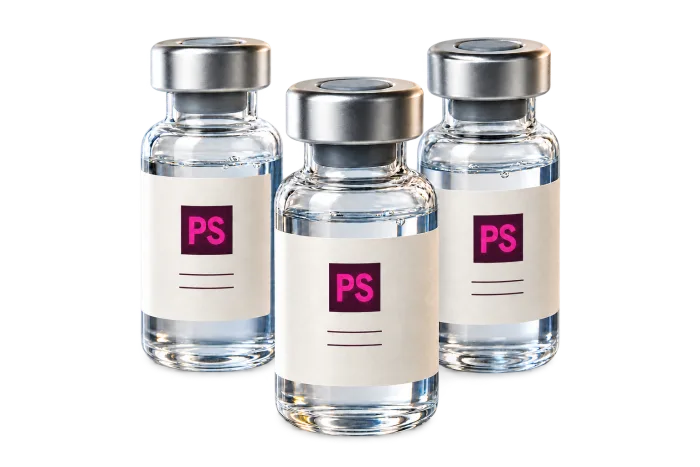
At a glance: “Research use only” and “prescription” are not interchangeable labels. They describe different intended uses and different regulatory contexts. A research material is not made into a medicine by a product page, a certificate, or an assertion that it is intended for laboratory work. Prescription treatment requires a product-specific framework that includes evidence, manufacturing, labeling, dispensing, and clinician oversight.
What research-use-only language is meant to signal
In a legitimate research context, a material may be supplied for laboratory investigation rather than for diagnosis, treatment, or administration to people. The point of the designation is to define the scope of use. It does not establish that the material is safe, effective, sterile, consistently manufactured, or appropriate for any personal purpose. It also does not erase the meaning of other statements made around it. If a seller combines “not for human use” language with detailed claims about treating symptoms, improving outcomes, or replacing medical care, the label should not be treated as a shield for the health claim.
Research itself is valuable, but it proceeds by asking constrained questions. A cell assay, animal model, or analytical method can produce useful data without answering whether people benefit or are harmed. The correct interpretation remains tied to the material, method, endpoint, and setting studied. A broad commercial category name is not a substitute for those details.
What prescription status involves
A prescription medicine is not defined solely by an active ingredient. FDA approval is linked to a specific product and approved use. Its labeling communicates indications, warnings, contraindications, adverse reactions, and other information needed for safe prescribing. Manufacturing and quality controls, postmarket safety reporting, and dispensing requirements are part of the framework. This is why it is inaccurate to imply that an experimental material is equivalent to a regulated medicine merely because a paper discusses a similar sequence or pathway.
Clinical use also needs a clinical relationship. A licensed professional considers a person’s history, diagnosis, current medicines, risks, and follow-up needs. An educational article cannot determine suitability, and a vendor description cannot replace the prescriber’s responsibilities. Where a health question is involved, readers should seek appropriate professional care rather than turning laboratory terminology into a self-directed plan.
Why the distinction is often blurred
Some marketing relies on technical vocabulary: purity, receptor, peptide, laboratory, or research. Those words can sound like proof, even when the claim has not been tested in people or evaluated by a regulator. A second pattern is to present a product as “for research only” while publishing instructions, testimonials, or condition-specific promises that plainly invite personal use. A third is to suggest that FDA approval is unnecessary because the material is naturally occurring or frequently discussed online. None of these arguments changes the evidence or regulatory status.
Readers can slow the process down by separating four questions: What is the exact material? What was it actually studied for? What quality information exists for the relevant lot? Is there an FDA-approved product for the claimed use? The answers will often be narrower than a sales page suggests. Our peptide terminology guide explains why sequence and mechanism are not clinical conclusions.
Documentation has limits
A certificate of analysis can describe selected findings for a sample tested by a stated method. It is not a prescription label, clinical trial, regulator decision, or proof that every lot is the same. Identity and purity are distinct measurements; neither one establishes human safety. Chain of custody, lot number, date, method, and laboratory scope all matter. For a practical reading framework, see How to Read a Peptide Certificate of Analysis and What Third-Party Testing Can and Cannot Prove.
Questions readers should ask
- Does the source clearly separate laboratory research from patient care?
- Is a health claim supported by relevant human evidence, not only a mechanism or animal result?
- Is an FDA-approved product being confused with a research material or an active-ingredient name?
- Does the quality document identify the tested lot and method?
- Is the page urging readers to bypass a clinician, pharmacy, or legitimate safety follow-up?
Safety and enforcement context
FDA communications and warning letters show why claims and intended use matter. The agency evaluates context rather than treating a disclaimer as a complete answer. Readers should use official FDA drug and enforcement resources to verify regulatory statements, not screenshots or copied claims. The FTC also provides guidance on health-related advertising: marketers need appropriate substantiation before making objective health claims. That standard is important because confident language can travel faster than careful evidence.
Context before confidence
Regulatory language is less exciting than a mechanism claim, but it is a necessary reality check. An approved label identifies a particular medicine and reviewed use; a research paper identifies an experimental question; a vendor page identifies a commercial offering. Treating one as though it were the others creates avoidable confusion. The responsible interpretation is the narrow one supported by the original record, especially where a page concerns a serious condition or an unapproved material.
Educational coverage can explain terminology and link to source material. It cannot verify a seller, establish product quality, resolve an individual medical question, or determine that a material should be used. Keeping those responsibilities separate is part of honest publishing.
Bottom line
Research-use-only material belongs in a research framework. Prescription treatment belongs in a regulated clinical framework. Keeping those categories separate protects scientific clarity and personal safety. This page does not give dosing, administration, sourcing, or purchasing advice, and it does not endorse research materials for human use.
Intended use is read from the whole context
A research-use-only statement is evidence about stated intent, but it is not evaluated in isolation from the rest of a page. Product names, navigation, search advertising, testimonials, condition-specific descriptions, fulfillment language, and instructions can all communicate a different intended use. A small disclaimer cannot reliably neutralize surrounding claims that invite personal treatment. This is why a careful audit records both the exact label and the practical message created by the full presentation.
The same principle helps readers avoid the opposite mistake: legitimate laboratory research does not become medical care merely because it studies a biologically interesting pathway. Institutional work may use documented procurement, trained staff, approved protocols, containment practices, and predefined disposal procedures. Those controls answer research-governance questions. They do not create a prescription indication or support an individual health decision.
Approval belongs to a finished product and use
An active ingredient name is not a portable approval. A regulator reviews evidence and controls for an identified finished product, manufacturer, formulation, labeling, and indication. A research material with a similar name may differ in composition, impurities, container, stability, and intended use. Likewise, a compounded preparation occupies a different regulatory context from an FDA-approved finished medicine. Articles should name those categories precisely instead of implying that one inherits the status of another.
Prescription safeguards also extend beyond the container. A prescriber evaluates an indication and patient-specific risks; a licensed pharmacy dispenses within applicable requirements; labeling communicates warnings and use conditions; adverse-event systems can identify new signals; and follow-up can change or stop care. None of those functions is supplied by a vendor certificate, a forum discussion, or an RUO checkout disclaimer.
Questions for research procurement
- Is the material’s stated research purpose consistent across the label, specification, invoice, and surrounding promotion?
- Are sequence, form, lot, quantity, and storage documentation sufficient for the planned analytical work?
- Does the receiving institution have an approved protocol and trained personnel for the material and hazards involved?
- Are supplier statements being recorded as supplier statements rather than treated as independent verification?
- Would a result from this lot answer only a research question, or is someone trying to convert it into a personal health conclusion?
These questions are deliberately separate from advice about where to buy or how to use a material. Their purpose is to keep documentation aligned with institutionally governed research and to make category errors visible.
Why the boundary protects both science and patients
Blurring RUO and prescription categories harms research literacy as well as health communication. It encourages readers to treat an exploratory result as established care and encourages quality documents to carry claims they were never designed to support. Clear boundaries let early work remain valuable on its own terms while reserving medical conclusions for evidence, products, and professional oversight that actually address patients.
Terminology should clarify that boundary instead of making it commercially convenient.
References
Editorial disclosure: no affiliate links. Education only, not medical advice.